
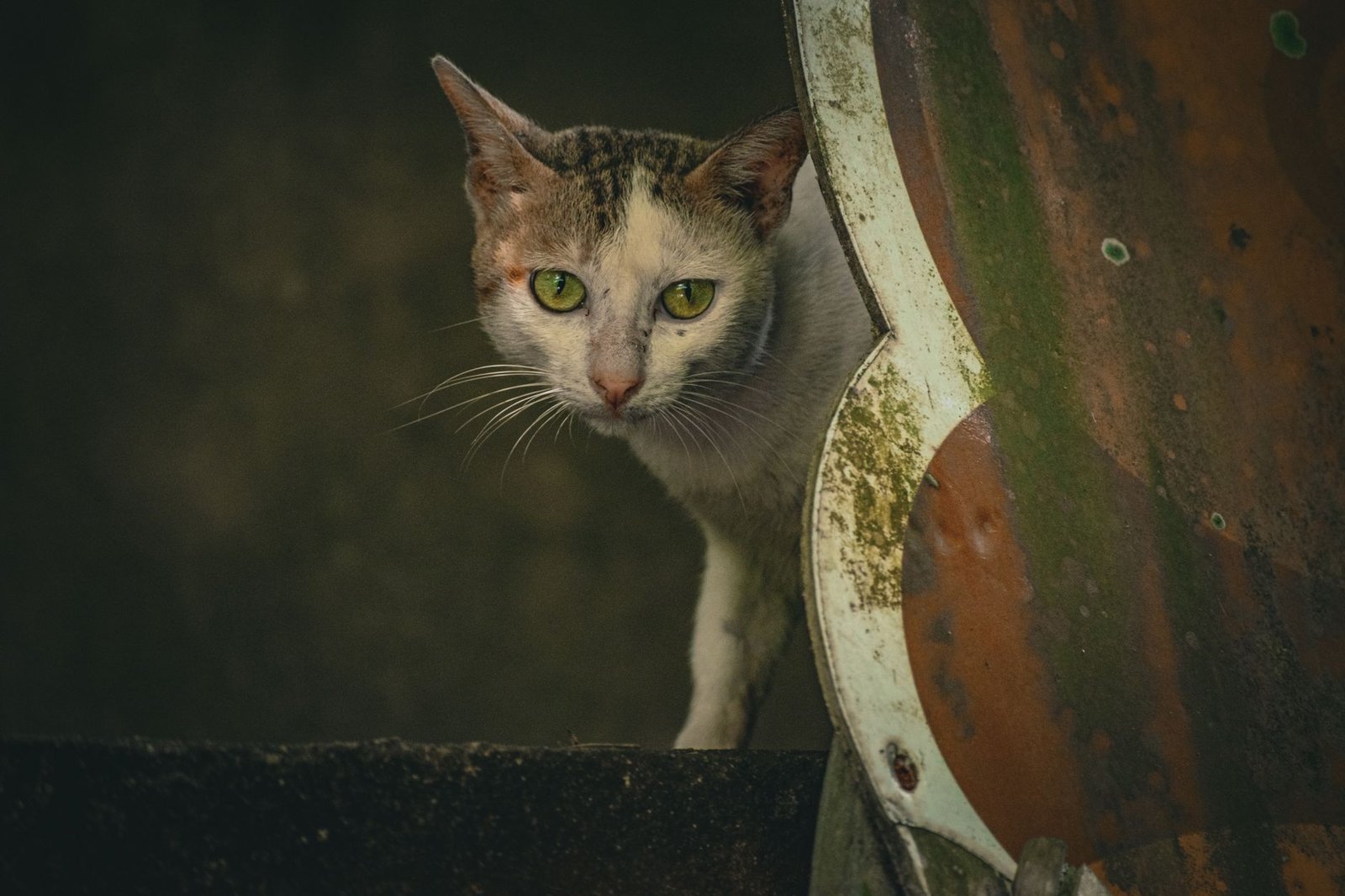
Cats process essential oils differently from dogs. They lack much of the liver pathway that handles the phenol and terpene compounds in oils like clove, oregano and tea tree, so a product that is unremarkable for a dog can build up in a cat. The concentrated oil is the real hazard, not the scent in the air.
Why this becomes a question in October
Diffusers are used year round, but two things change once the weather turns in Mission. The windows close, so a room that aired itself all summer now holds whatever is put into it. And the diffuser runs for longer, because the evenings are long and dark and the house smells of wet dog.
A cat in a closed room with a running diffuser cannot choose to leave if there is no open door. That single fact accounts for most of what goes wrong.
The chemistry, briefly, because it explains everything else
Cats have much less of an enzyme pathway called glucuronidation than dogs or people do. That pathway is how the body packages up and clears a family of compounds called phenols, which are common in essential oils. Less of the pathway means slower clearance, which means a compound that a dog deals with in hours can build up in a cat over a day or two.
This is the same reason cats are unusually sensitive to a number of common human products, and it is not a matter of size or of cats being delicate. It is a specific, well-described gap in feline liver chemistry.
That pathway clears both the phenols that oils like clove, oregano and thyme are rich in, and the terpenes that make up most of tea tree oil. The oils of most concern for cats include tea tree, oregano, thyme, clove, cinnamon, wintergreen, birch, pine, peppermint, eucalyptus, citrus oils, ylang ylang and pennyroyal. Tea tree is the one that causes the most trouble by a distance, because it is sold as a remedy and gets applied to animals on purpose.
Three routes in, and they are not equally serious
On the skin or coat: the serious one. Concentrated oil on fur is the exposure that makes cats genuinely unwell. It absorbs through skin, and the cat then grooms the rest off. A knocked-over reed diffuser, a spilled bottle, or oil applied deliberately to a cat for fleas or a skin problem all land here. Signs include wobbliness, tremors, drooling, weakness, a low body temperature, vomiting, dullness and, with tea tree in particular, liver injury. A cat can be seriously affected by a surprisingly small amount of a hundred percent oil.
By mouth. Lapping at a diffuser reservoir, chewing a bottle cap, or licking oil off a surface. Expect drooling, pawing at the mouth, vomiting and sometimes redness or soreness inside the mouth, then the same general signs as above. Oils are easily breathed into the lungs if they come back up, which is an aspiration risk and the reason making a cat vomit is the wrong move here.
In the air. The least dangerous of the three and the one people worry about most. An ultrasonic or nebulizing diffuser in a normally ventilated room is unlikely to make a healthy cat unwell, but it can irritate airways: watery eyes, a runny nose, sneezing, coughing, or a cat who starts avoiding a particular room. For a cat with asthma or any existing airway problem, that irritation is a real setback rather than a nuisance. If an asthmatic cat starts breathing hard, breathing with an open mouth, wheezing, or sitting with their neck stretched out, that is an emergency and not something to wait out: get them into fresh air and come in, or go to the nearest open emergency hospital if we are closed. Birds are in a different category again and are extremely sensitive to anything aerosolized. If a bird has been in a room with a diffuser running, get them out into fresh air straight away and phone us immediately rather than waiting for them to look unwell, because birds go downhill quickly.
There is one more thing worth knowing about air diffusers: an ultrasonic unit puts out fine droplets, and those droplets settle. They land on the floor, the furniture and the cat, and then the cat grooms. So the air route and the coat route are not fully separate.
If your cat has had oil on them or in them
- Get them into fresh air if a diffuser or spray is involved, and open a window or a door.
- Do not make your cat vomit. Oils are easily inhaled, and material going into the lungs is a worse problem than the one you started with.
- Wash concentrated oil off the coat with lukewarm water and a mild liquid dish soap, working at it for a good ten to fifteen minutes, then rinse thoroughly. Plain water will not shift an oil. Wear gloves, keep it away from the eyes, and dry your cat afterwards, because a wet cat loses heat quickly and these exposures already lower body temperature.
- Flush the eyes with lukewarm water or sterile saline for a full fifteen to twenty minutes if any went near them. Set a timer, because it is longer than it feels.
- Offer a little water or a spoon of wet food if your cat is alert and swallowing normally, because diluting what is in the mouth helps. Do not force it, do not syringe it, and give nothing by mouth if your cat is wobbly, trembling or drowsy.
- Do not give milk or oil. Neither helps and both complicate what follows.
- Bring the bottle. The oil, the concentration and whether it is a blend all change what we do, and “lavender something” is not enough to work from.
- Phone us and come in if your cat is drooling, wobbly, trembling, weak, dull or cold to the touch, or if concentrated oil went on skin or in the mouth at all.
Come in through our emergency care. Our pet diagnostics team checks liver values, which with tea tree exposure are worth repeating over the following two to three days rather than reading once, and our medical services team manages the warming, fluids and monitoring that a wobbly, cold cat needs. Cats who are seen early generally do well.
We are open 8:00 AM to 8:00 PM Monday to Friday and 9:00 AM to 5:00 PM on Saturday and Sunday. Diffusers run in the evening, so the awkward windows are after we close and overnight, plus weekend evenings after five, Saturday and Sunday both. If your cat is unsteady, trembling or unusually cold during those hours, go to the nearest open emergency hospital and have someone phone ahead rather than waiting for us to open. A cat whose temperature is dropping should not wait out a night.
Using a diffuser sensibly in a house with cats
- Never apply any essential oil to a cat, for any reason, including fleas, ear problems, wounds or anxiety. This is the single most important line here, because it is the exposure that causes the most harm and it is entirely avoidable.
- Run a diffuser only in a room the cat can leave, with the door open. A cat who dislikes a scent will remove themselves if allowed to.
- Keep it off the floor and out of jumping range, and unplug it when you leave the room. The reservoir is the drinking hazard.
- Avoid passive reed diffusers altogether. They hold concentrated oil in an open vessel that tips, and a spill of neat oil is the exposure that does the real harm.
- Store the bottles closed and away, not on a bathroom shelf a cat walks along.
- Choose the lower-risk oils if you use any, and keep the duration short and the ventilation good.
- Stop entirely if you have an asthmatic cat or a bird in the house. For birds this is not a precaution, it is a hard no.
- Wipe up spills immediately and wash the floor, because a cat will walk through a drop and groom it off within minutes.
- Watch for avoidance. A cat who starts sleeping in a different room when the diffuser is on has given you an opinion. Take it.
Our guide to ticks not stopping in autumn covers the other thing people assume ends with the summer, and it is worth reading if you are thinking about parasite cover through the wet months.
Questions we are asked
Is my diffuser harming my cat right now?
Probably not, if the room is ventilated, your cat can leave, and the unit is out of reach. The air route is the least dangerous of the three. What would change that answer is a cat shut in with it, a cat with asthma, a bird in the house, or a unit on the floor where it can be tipped or drunk from. One more: an ultrasonic unit throws fine droplets that settle, so keep run times short, keep it away from where your cat sleeps, and wipe surfaces near it, or the air route quietly becomes the coat route. If your cat is coughing, sneezing or watery-eyed, turn it off, and if that does not settle quickly, phone us.
Someone recommended tea tree oil for my cat’s itchy skin.
Please do not use it. Tea tree oil applied to cats is one of the more reliable ways to make a cat seriously unwell, and it is almost always done with the best intentions. Even a small amount of the hundred percent oil can cause wobbliness, tremors, a low temperature and liver injury. If your cat is itchy, come and let us look, because the cause changes what helps and itch has a long list of causes.
My cat knocked over a reed diffuser and has oil on her back.
Wash it off now with lukewarm water and mild dish soap, rinse well, dry her, and phone us. Do not wait to see whether she becomes unwell, because the absorption is already happening and the grooming will add to it. Bring the bottle so we know which oil and at what strength.
Are the plug-in air fresheners from the supermarket the same thing?
Not quite. Most plug-in fresheners use fragrance compounds at low concentration rather than neat essential oil, so the spill hazard is smaller. The airway irritation question is much the same, and the same advice applies: ventilation, a room the cat can leave, and pay attention if your cat starts avoiding it. A cat with asthma does better in a house without any of them.
How long after an exposure would I see a problem?
With concentrated oil on skin or in the mouth, usually within a few hours, and sometimes building over a day or two as it is absorbed and groomed. With tea tree specifically, liver values can shift over the following two to three days, which is why one normal blood sample on the first evening is not the end of the conversation. Watch for wobbliness, drooling, weakness and a cat who feels cool to the touch.
Are dogs safe around all of this?
Safer, not safe, and not by as much as people assume. Dogs have the liver pathway cats largely lack, so air diffusion is rarely a problem for a healthy dog. Concentrated oil is a different matter: poison-centre records cover hundreds of dogs exposed to undiluted tea tree oil and most of them showed signs, including wobbliness, tremors, weakness, drooling and in some cases liver changes, starting two to twelve hours in and lasting up to three days. It needs the same response as for a cat: wash it off, do not make them vomit, bring the bottle, and phone us. The oils to keep well away from dogs are the same list, with tea tree and pennyroyal at the top.
What about using oils to calm a nervous cat?
It is not a route we would suggest, and the risk sits in the wrong place: a nervous cat shut in a room with a strong unfamiliar scent is more likely to be made worse than better. There are approaches to feline anxiety that are both safer and better supported, and they start with a conversation about what is actually triggering it. Bring it up at the next visit.
Speak to the team at Mission Veterinary Hospital
If your cat has had concentrated essential oil on their coat or in their mouth, or is unsteady, drooling or unusually cold, phone us and come in, and bring the bottle. Outside our hours, go to the nearest open emergency hospital and have a passenger phone ahead.
Published by the team at Mission Veterinary Hospital.
This article is educational in nature and is not a replacement for hands-on assessment of your own pet by a veterinarian.
Mission Veterinary Hospital and Urgent Care
31945 Lougheed Hwy., Mission, BC V2V 0K8
Phone: (604) 826-8456
Hours: Monday to Friday 8:00 AM to 8:00 PM; Saturday and Sunday 9:00 AM to 5:00 PM